Sunday, 6 December 2020

Thinking Activity: Black Skin and White Mask


“Black Skin, White Masks” (1952) is a book about the mindset or psychology of racism by Frantz Fanon, a Martinican psychiatrist and black, post-colonialist thinker. The book looks at what goes through the minds of blacks and whites under the conditions of white rule and the strange effects that has, especially on black people. The book started out as his doctoral thesis that hd wrote to get his degree in psychiatry. So it is written for white French psychiatrists and speaks mainly about Martinique and France in the early 1950s.That makes it a hard book for the general reader to understand. 


Every now and then he says something wow that keeps you going, but it requires rereading and a good deal of thought to understand a given chapter. And even then you do not fully understand it – you just understand it better Yet it is well worth reading since his understanding of White French racism in the early 1950s helps you to understand White American racism in the 2010s.


1. Fanon: The Black Man and Language - if you do not learn the white man’s language perfectly, you are unintelligent. Yet if you do learn it perfectly, you have washed your brain in their universe of racist ideas.


2. Fanon: The Woman of Colour and the White Man - these women look down on their own race and deep down want to be white.


3. Fanon: The Man of Colour and the White Woman - these men want to be white too –or at least prove they are equal to whites.


4. Fanon: The So-Called Dependency Complex of the Colonized - argues against Mannoni’s view that people of colour have a deep desire for white rule, that those who oppose it do not have a secure sense of self – that they have a chip on their shoulder. From this chapter I came to understand that the stereotypes of Happy Darkies, Uppity Negroes and White Saviours all come from the need of white people to feel that their power in society is good and not racist.


5. Fanon: The Lived Experience of the Black Man - always black, never fully human. No matter how much education you have or how well you act. Yet shouting your blackness is a dead end too.


6. Fanon: The Black Man and Psychopathology - why white people fear black men. Partly it has to do with white men’s repressed homosexuality and their strange hang-ups about black men’s penises. More generally, black men are viewed as bodies, which makes them seem like mind-less, violent, sexual, animal beings. Add to that all the bad meanings that the word “black” had even before Europeans set foot in Black Africa.


7. Fanon: The Black Man and Recognition - how different styles of white rule shaped black people in America and Martinique. Fanon: By Way of Conclusion - escaping the prison of one’s past and one’s race.


Frantz Fanon does not want to be a black man, he wants to be a man, plain and simple.The trouble with blacks and whites is that both have become prisoners of their pasts:

Both have to move away from the inhuman voices of their respective ancestors so that a genuine communication can be born… Superiority? Inferiority?

Why not simply try to touch the other, feel the other, discover each other?

So Fanon is not much interested in black history, reparations, making whites feel guilty for shouting his hatred at them. All those things are a reaction against racism, which means you are still a prisoner of racism, still a prisoner of your past and your colour. I will not make myself the man of any past. I do not want to sing the past to the detriment of my present and my future. Let the dead bury the dead: I am my own foundation. Besides, history is not everything. For example, do we need to understand history to understand the war in Indo-China? No. We only need to understand that the Indo-Chinese were not put on this earth to become the houseboys and cheap women of white men:


When we recall how the old colonial hands in 1938 described Indochina as the land of piastres and rickshaws, of houseboys and cheap women, we understood only too well the fury of the Vietminh’s struggle.

Thank you....

Saturday, 5 December 2020

ASSIGNMENT: English Language Teaching - 1


Name :- Dharti makwana 

Batch :- 2019-2021

Roll No. :- 5

Semester :- M.A. Sem-3 

Enrollment No. :- 2069108420200024 

Submitted  :- Smt. S.B. Gardi Department of English, M.K.Bhavnagar University 

Email :- dharteemakwana789@gmail.com 

Paper No. :- ELT-1

Topic :- 

Digital Revolution in Learning and Teaching Language 


Introduction:-


How has the digital revolution taken place in the learning and teaching process? The digital revolution is at an excellent and unprecedented rate, the recent increasing use of digital technologies among education systems in developing countries. It has a vast significance of introducing new ideas as well as direction of communicating, teaching and learning. So it becomes a friendly momentum of technological development that before some people had estimated that by 2020, the Internet will connect the human race in its entirety. But still somewhere it is not successfully applied to every place. 


"21st Century Education won't be defined by any new technology. It won't be just defined by 1:1 technology programs or tech-intensive projects. 21st Century Education will, however, be defined by a fundamental shift in what we are teaching - a shift towards learner-centered education and creating creative thinkers."

 - Karl Fisch


The first forms of new technology used in the classroom in centuries. During these days we are using slides, projectors to display pictures on glass plates and glass boards. Since then, we now have more advanced tools, such as the overhead projector, which have had their run in aiding the instruction process. More recently, with the advent of personal computers, the Internet, and personal devices like tablets and smartphones, teachers have increasingly shifted to presenting their lesson plans in digital formats.


Already very arduous time is going on where teachers are constantly finding new ways of teaching and although teachers are increasingly turning towards technology because there is no other option to teach the lessons. They are trying to enhance their lessons and make learning easier and fun so students can attentively learn. It brings some important areas where technology has positively impacted the learning system in India.


Assignment based on following questions


Are there teachers who use modern technology in teaching English language?


How effectively do English language learners respond and/or interactive with the use of modern technology? 


How effective is the use of modern technology in teaching English? 

What are the expected outcomes?


Advancement of the Digital Revolution in learning and teaching progress. 


“Teachers need to integrate technology seamlessly into the curriculum instead of viewing it as an add-on, an afterthought, or an event.” – Heidi-Hayes Jacobs


That is what makes right sense of using technology to explore the new advancement of technology rather than to just viewing. When we talk about technology then the question raised like What is the impact of the digital revolution on language learning and teaching? The answer should be like that digital skills and their critical awareness of online teaching resources are increasing so that these can be integrated effectively into teaching and learning programs. 


There are a number of things and projects related to the use of new features in different learning / teaching environments. There are some features which gives enormous benefits in learning and teaching language which is given below 


Blogger: -


Peter Duffy, Educational Development Officer at The Hong Kong Polytechnic University, and Dr. Axel Bruns, Media and Communication, Creative Industries faculty member at Queensland University of Technology, suggest that students can benefit from the structure of a blog in several ways. A blog provides students with an opportunity to demonstrate critical thinking skills and to employ language and writing principles that demonstrate analytical thought and comprehension. Blogs also give students a platform from which creative risks can be taken, Duffy and Bruns say. As students are given writing assignments for blog posts, they will learn the benefits of commitment, scheduling and planning as they strive to meet deadlines and stay on topic. 


Blogging benefits students by providing supplemental support for the administrative affairs of a classroom. For instance, in addition to official written correspondence between teachers, students and parents, a blog can serve as a central location that contains material relevant to the class, such as calendars of events, assignment recaps and course syllabi. With its ability to support digital photos and videos, a blog can also be a gathering place for students to view images and video of class activities, such as a field trip.


You Tube:-


Today, perhaps more than ever before, it is important to recognize that 


“learning is a lifelong experience” 


and is the key to the future we want for ourselves. It has become a fantastic resource for anyone wishing to learn or practise a foreign language, especially English. the process of learning a language is repeated exposure to the language in its natural form, in a real-life context. Thus, video as a tool for education can bring multiple benefits for both teachers and students in this case. In education YouTube helps in terms of providing the video of teaching and learning for the students to get the knowledge from the expert professors from well known universities in another part of the world.


  • Not only students but teachers are able to access the sources of learning anytime anywhere they want without any payment.

  • Students also can upload their own study related videos. 

  • Provide the chance for all the learners to study with a high professional teacher especially for those who have no chance to go university.

  • There are many skill people who upload their video and we can learn from their skill.

  • YouTube is a very wide classroom for teaching and learning which we can save on our time and budget.

  • It is a big digital library which has both image and sound.

  • YouTube is a site where we can playback all the videos which help students to not miss the interesting study videos.

  • It is the place where everybody can promote their skill, their talent and there are many people who become famous by uploading their videos on YouTube.

  • As we know that YouTube is a video sharing site which everybody can enjoy thus the world will become smaller and smaller and the people are learning from each other.


Online Courses :-


An online course requires just as much work as an on-ground format, and the amount of time you dedicate is also about the same. However, the online format just as a virtual workplace affords you more flexibility. As long as you meet your deadlines and communicate with your instructor and peers, it doesn’t matter where or when you fulfill the requirements. Each week, your instructor typically expects you to take the following actions yourself:


  • Review the learning objectives

  • Complete the assigned readings

  • Submit assignments

  • Go through the lecture materials

  • Participate in the discussion boards.


You are probably experienced at independently completing the first three actions from previous in-person courses. Learning from an online lecture is different, but you can also do it wherever and whenever.


Google classroom :-


Compared to other LMS (Learning Management Systems) that have been popular over the past decade, Google Classroom is amazingly simple. All of us have a classroom set up and running by the end of the year. Google Classroom can be accessed from any computer via Google Chrome or from any mobile device regardless of platform.  All files uploaded by teachers and students are stored in a Classroom folder on Google Drive. Users can access Classroom anytime, anywhere. Students no longer have to worry about crashed computers. Classroom provides students with exposure to an online learning system. Students can complete assignments and assessments directly through Classroom, and their work is also saved for Drive. 


Advancement of learning through Google Classroom 


  • Easy to use and accessible from all devices.

  • Effective communication and sharing.

  • Speeds up the assignment process.

  • Effective feedback.

  • No need for paper.

  • Clean and user-friendly interface.

  • Great commenting system.

  • Educators can also join Google Classroom as learners and your colleagues and use it for faculty meetings, information sharing, or professional development. 


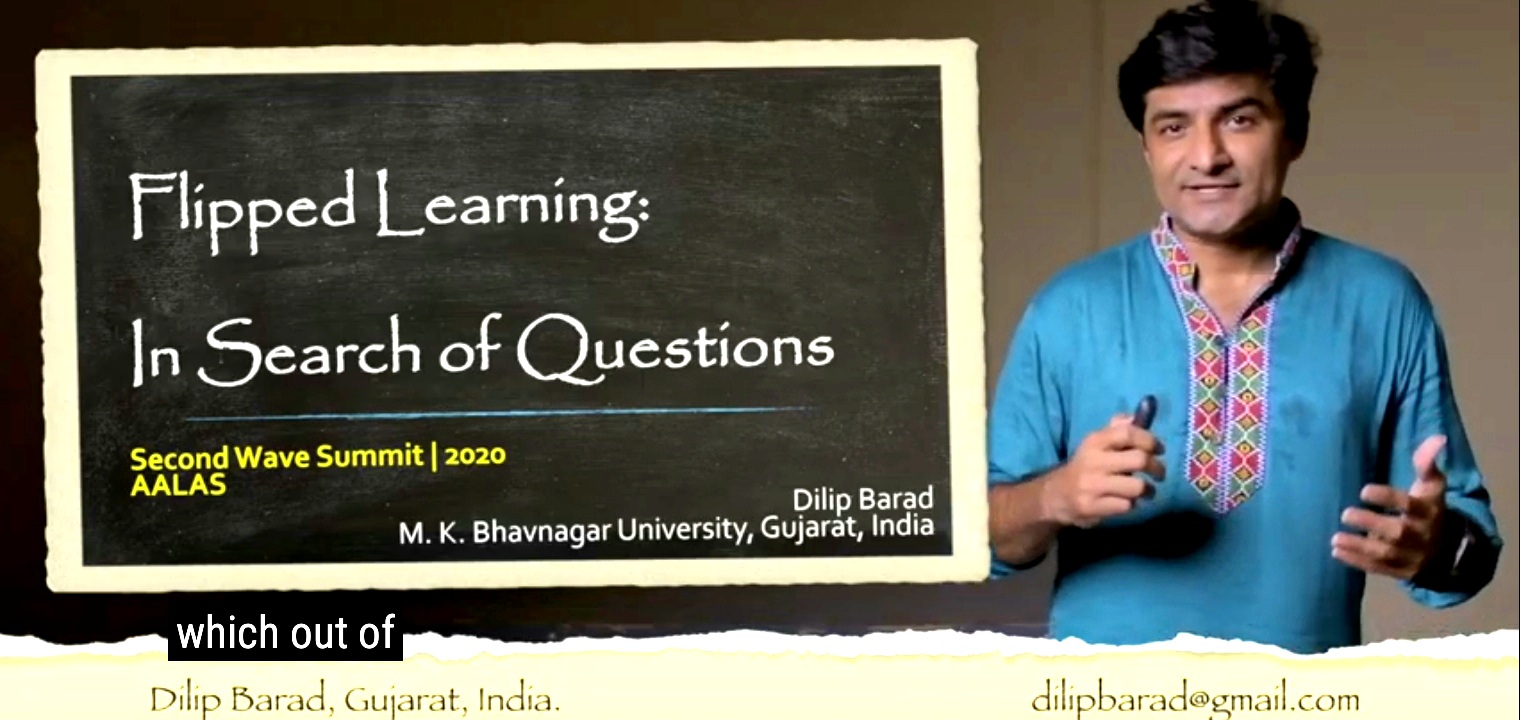
Flipped Learning :-


Blended learning is one of the most important pedagogical formats that can enhance student learning, optimize the use of active learning strategies, and potentially improve student learning outcomes. The Virtual flipped classrooms the students to watch and listen to lectures at home and then perform their interactive activities and apply their knowledge in a virtual synchronized classroom in a way similar to the real classroom environment.


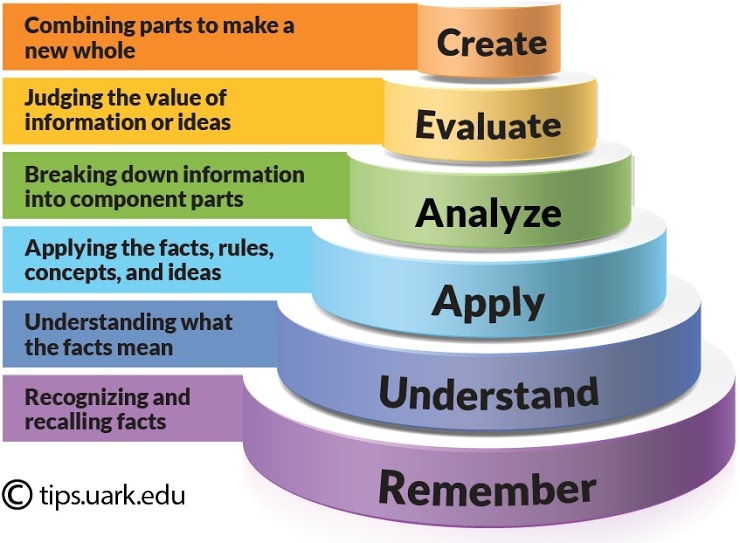
Flipped Learning shifts the classroom from passive to active learning, focusing on Higher Order Thinking Skills (HOTS) such as evaluating, analysing, and creating to engage students in learning.


One such way is class attendance hard to be engaged with class work if you're not there and on that score flipped learning does very well. where a student is first exposed to new material outside of class, usually in the form of an online presentation. Each lecture video is no more than 10 minutes in length, and covers only one concept. So it is easy to understand the different concepts. 


Learning technologies have given rise to a number of approaches that instructional designers can use to deliver eLearning content. Based on extensive research, the  NTL developed an effective Learning Pyramid that demonstrates a clear relationship between the teaching method of choice, and content retention rates.


Important role of Mass Media in the language learning and teaching: -


The idea of learning English through the mass-media can also be traced to the research study Language Teaching and Media Literacy (2001) conducted in Spain by Carmen Gregory Signes. He proposes the view of employing media resources for teaching English in the classroom by 


“raising awareness about the potential of widely accessible and available mass-media products” (Signes:123)


like a piece of newspaper cutting or TV shows, radio talks, films and movie strips for the students of the secondary schools in Spain. He examines the role of the mass-media in ELT and cites the working examples of the types of exercises that may go a long way in improving teaching-learning of English. He observes that 


Nowadays, the media precede us. When students come to school, they have already learned a great deal from TV, radio, Internet, etc. that we should not ignore but take advantage of it. There is practically no way of avoiding the mass-media.They are part of our life. Thus, if we teach students how to analyse the mass-media products we are helping the students to develop a whole range of individual, practical, social, cultural and intellectual skills which they need in future. We ought to start taking TV, computer games, internet, etc. seriously and use them not only as teaching material but as an efficient way to motivate the students. We should make them understand how these mass-media work, i.e., our students should be media literate (Signes :123).


Outcomes or benefits of writing of this Assessment


  • Have a base understanding of the digital and communication revolution that is changing how we interact with each other.

  • Better understand the power of social media and how it impacts our students and ourselves.

  • Become aware of the power of learning analytics and adaptive learning to better customize how we prepare content for our students.

  • Understand how big data and privacy intersect.

  • View the power micro credentials and digital badging.

  • Learn the importance of our digital reputation and how to take control of it.

  • Understand the power of communities and our desire to fit in.


Conclusion :-


Like most technological advancements, the digital revolution has changed our lives in both positive and negative ways. As educators, it is definitely part of our job to try to mitigate the damages from the negative aspects. However, we must not ignore the positive aspects and must try to use them to ours and our students’ advantage.


Citations 


Arifah, A. Study on the use of technology in ELT classroom: Teachers’ perspective (M.A. Thesis). Department of English and Humanities, BRAC University, Dhaka, Bangladesh. 2004. 


Aydin, S. Teachers’ perceptions about the use of computers in EFL teaching and learning: The case of Turkey. Computer Assisted Language Learning, 2013.


Baytak, A., Tarman, B., & Ayas, C. Experiencing technology integration in education: Children’s perceptions. International Electronic Journal of Elementary Education, 3(2), 139-151. Retrieved November, 2020, from 

https://www.iejee.com/index.php/IEJEE/article/view/233


Beatty, K. Teaching and Researching Computer Assisted Language Learning. New York: Longman. 2003.


Jacqui, M. 13 Reasons for Using Technology in the Classroom. 2015. Retrieved from https://www.teachhub.com/13-reasons-using-technology-classroom  


ASSIGNMENT: American Literature


Name :- Dharti Makwana 

Batch :- 2019-2021

Roll No. :- 5

Semester :- M.A. Sem-3 

Enrollment No. :- 2069108420200024 

Submitted  :- Smt. S.B. Gardi Department of English, M.K.Bhavnagar University 

Email :- dharteemakwana789@gmail.com 

Paper No. :- American Literature 

Topic :- 


Transcendentalism and Anti - Transcendentalism in The Scarlet Letter 


Introduction 


This transcendentalist movement was inspired by the publication of Ralph Waldo Emerson’s essays, “Nature” in 1836 and “Self-Reliance” in 1841. Stemming from the larger 19th-century European romanticism, New England transcendentalists (Goodman, 2017; Habich and Nowatzki, 2010) reject Calvinism, or the doctrine of predestination practiced by the Puritans, by asserting that human nature is innately good and that truth can be acquired from intuition and nature, not from reason and logic. 


As such, authority or society-imposed formal institutions such as government and religion may prevent people from using their intuition and cause them to become corrupt. In contrast with transcendentalism, anti-transcendentalism (better known as dark romanticism) is based on the belief that evil and sin are inherent characteristics in human beings. 


Therefore, an optimistic outlook on humanity is naïve because people must struggle to obtain goodness and avoid evil, which can exist even in a physical form in society. As an American novelist during this interesting time of contrasting intellectual and literary philosophies, Nathaniel Hawthorne weaves both transcendentalism and anti-transcendentalism thread into his immediately successful novel The Scarlet Letter to give readers a chance to evaluate different beliefs and different aspects of the early American life at the New England settlement in the seventeenth century.


TRANSCENDENTALIST ASPECTS OF THE SCARLET LETTER


The Scarlet Letter contains both transcendentalist and anti- transcendentalist views and ways of life organizing around the central theme of sin. The basic premises of transcendentalism depicted in the novel include beliefs in self-confidence and self-reliance, in transforming or changing for the better, in individual worth and dignity of manual labor, in innate goodness of people, in the benefits of living close to nature, and in the fact that truth is acquired through intuition, not reason nor logic. 


Self-confident, Self-reliant, and Dignity of Manual Labor. 


In The Scarlet Letter, it is initially determined by the local government that the typical penalty of death for adultery is mercifully reduced due to the fact that Hester’s husband may already be “at the bottom of the sea” (deceased) and she can be effectively considered a widow (Hawthorne, 1850, p. 60). As a result, Hester is condemned to stand on the scaffold for three hours at mid-day for public humiliation and wear the scarlet letter A on her chest for the remainder of her life. Although Hester is initially filled with grief and shame for being subject to ridicule and harsh judgment by the townspeople, she chooses to be self-confident and self-reliant. She walks with dignity and displays her own free will, 


“…he placed his right upon the shoulder of a young woman, whom he thus drew forward; until, on the threshold of the 

prison-door, she repelled him, by an action marked with natural dignity and force of character, and stepped into the open air, as if by her own free-will.” 


This image shows that when the town beadle tried to force Hester to move forward from the prison door, the dignified and proud Hester rejected his force. She would not let authorities of her society push her around and make her feel weak and vulnerable. Hester even embroiders the condemned scarlet letter A with luxurious red velvet and gold thread on her chest,


“…was that SCARLET LETTER, so fantastically embroidered and illuminated upon her bosom. It had the effect of a 

spell, taking her out of the ordinary relations with humanity, and including her in a sphere by itself” (Hawthorne, 1850, p. 52). 


This sentence depicts Hester’s strong will to turn her life around, despite her adversity. Instead of letting the scarlet A letter be a symbol of her shame, she selects the finest red cloth and embroiders the letter A with illuminated gold thread to celebrate her unique life, away from the relation with her fellow Puritan society. Perhaps, instead of wearing the typical scarlet letter A as a symbol of shame (Adultery), she proudly wears hers as a token love for Dimmesdale (the initial letter of Arthur, Reverend Dimmesdale’s first name) and continues to live a life undisturbed by the harsh judgment of others around her.


To support her infant child Pearl, Hester settles on the outskirts of town, in an abandoned cottage that is next to the seashore and surrounded by the forest to the west (Hawthorne, 1850, p. 78). Alone, she utilizes her skills in needlework to make a living and raise Pearl. She does not leave town, perhaps with a dream to reunite with her lover again someday. 


Transformation and Innate Human Goodness 


During the early years of her seclusion from society, Hester experiences some transforming or changing in herself, 


“to the credit of human nature, that, except where its selfishness is brought into play, it loves more readily than it hates. Hatred, by a gradual and quiet process, will even be transformed to love, unless the change be impeded by a continually new irritation of the original feeling of hostility” (Hawthorne, 1850, p. 156). 


This transformation in Hester, from anger or resentment to love, is a clear display of transcendentalism. She can experience the beauty of love due to good human nature, reflecting transcendentalist ideology. Because of her transformation and her innately good character, Hester never stops helping those who are destitute or sick around her, 


“Except for that small expenditure in the decoration of her infant, Hester bestowed all her superfluous means in charity, on wretches less miserable than herself, and who not unfrequently insulted the hand that fed them…she employed in making coarse garments for the poor…” (Hawthorne, 1850, p. 80). 


Living Close to Nature


Living on the outskirts of town with Pearl, surrounded by nature - the sea and the woods, Hester also starts to learn about herself, 


“She had wandered, without rule or guidance, in a moral wilderness…Her intellect and heart had their home, as it were, in desert places…For years past she had looked from this estranged point of view at human institutions…The tendency of her fate and fortune had been to set her free” (Hawthorne, 1850, p. 196). 


Because of her acquired freedom of thought or of speculation, she can comfortably advise her lover, Reverend Dimmesdale, of the various actions he can take to reduce his guilt and sufferings after she discloses to him that Chillingworth is the assumed entity of her long-lost husband (Hawthorne, 1850, p. 193).It is in the forest, or nature, where Hester and Dimmesdale reconnect their feelings for each other - and nature responds with a burst of sunshine to celebrate “the bliss of the two spirits! Love…” (Hawthorne, 1850, p. 199). Here in the deep forest, Hester and Dimmesdale can put down their guard, reclaim their deep love toward each other, and agree to escape together to England to begin their life a new, 


“Do I feel joy again…O Hester, thou art my better angel!...This is already a better life! Why did we not find it sooner?” (Hawthorne, 1850, p. 198). 


This special moment shows that society-imposed formal institutions such as government and religion collapse in the heart of this couple deeply in love. Seven long years of immense guilt and harsh punishment imposed by society cannot change them and cannot deter them from committing their “sin” again, out of love.


Acquiring Truth through Intuition


In addition, Pearl becomes an observant child full of intuition because she somehow feels and guesses that Dimmesdale is her father without him admitting it or without her mother telling it to her. As a three-month old infant, Pearl instinctively responds to Dimmesdale’s voice at the first scaffold scene (Hawthorne, 1850, p. 65). As a three-year old child, she tenderly caresses Dimmesdale’s hand when the minister argues on her mother’s behalf to keep her (Hawthorne, 1850, p. 112). 


ANTI-TRANSCENDENTALIST ASPECTS OF THE SCARLET LETTER


As discussed above, in addition to transcendentalist aspects shown primarily in Hester and Pearl, anti-transcendentalist elements are also presented in Hawthorne’s famed novel. These elements include moral corruption, guilt, hatred, revenge, etc. that are expressed prominently in the characters of Dimmesdale and Chillingworth.


Human Sin and Its Psychological Effects Dimmesdale’s decision to keep his sin a secret burdens him from the very beginning of the novel, at the first scaffold scene. He is found to have “an air about him, an apprehensive, a startled, a half-frightened look – as of a being who felt himself quite astray and at a loss in the pathway of human existence…” (Hawthorne, 1850, p. 64). Dimmesdale’s straying from the path of human existence exemplifies the fear of his own sin, which makes up his dark moral corruption.


Revenge as Dark Human Emotion and Conviction


Another character with dominant anti-transcendentalist qualities in the novel is Chillingworth, the assumed entity of Hester’s long-lost husband. Chillingworth is a highly learned man, and his sin is of different nature from Dimmesdale and Hester. His sin resides in his persistent vindictiveness toward Dimmesdale, which turns him into a devil because he absolutely refuses to forgive his wife’s lover. On the first day coming back to civilization after being kept by the native “Indians” for two years and upon learning of his wife’s betrayal and shame, Chillingworth decides to hide his true entity from the Puritan town because he does not want to be known as the husband of a shameful woman (Hawthorne, 1850, p. 74).


However, he thinks that his wife’s secret lover wrongs both of them, perhaps because Hester’s lover’s unconfessed sin denies her infant a father. Chillingworth then takes on a new mission “to look into the mystery” and find the hiding transgressor as he declares, “It irks me, nevertheless, that the partner of her iniquity should not, at least, stand on the scaffold by her side. But he will be known!” and “I shall seek this man as I have sought truth in books, as I have sought gold in alchemy. 


The anti-transcendentalist characteristic in Chillingworth manifests fully during the seven years after that fateful scaffold day, as Chillingworth relentlessly pursues his revenge, “He had begun an investigation, as he imagined, with the severe and equal integrity of a judge, desirous only of truth...He now dug into the poor clergyman’s heart like a miner searching for gold; or rather, like a sexton delving into a grave” (Hawthorne, 1850, p. 125). 


Devil in Physical Form


During this time, another anti-transcendental characteristic is seen in Chillingworth - that is he literally becomes a devil in physical form, “At first his expression had been calm, meditative, scholar-like. Now there was something ugly and evil in his face” (Hawthorne, 1850, p. 124). Eventually Chillingworth’s evil becomes so invasive that the Puritan village and little Pearl could see the devil of the Black Man in him. Ironically, even Chillingworth notices that he himself has changed from a kind, trustworthy man with “constant if not warm affections” to a devil, as he admits it to Hester: 


“A mortal man, once with a human heart, has become a fiend for his especial torment!” (Hawthorne, 1850, p.168-169). 


Although Chillingworth recognizes his own transformation, he refuses to change for the better and forgive Dimmesdale. As the minister Dimmesdale dies of his weakness and moral corruption, the devil Chillingworth dies within a year of Dimmesdale because he lacks the subject of his revenge.


CONCLUSIONS


As addressed above, there are both transcendentalism and anti-transcendentalism aspects presented in this novel.Although the elements of “sin” and “evil” are pervasive in the story, this book ends on an optimistic note about human nature - highlighting the basis of transcendentalism. It is interesting to find out in the conclusion of this story that although Chillingworth harbors immense hatred and relentlessly pursues torturous revenge toward Reverend Dimmesdale, he has enough empathy and tender feelings for the little innocent Pearl to leave all his great fortune in New England and Great Britain to help the child of his eternal enemy.


Citations 


Applebaum, L. (2008). The Scarlet Letter: Deadly nightshade, dogwood, and henbane. The Herbarist 74, 30-33.


Bloom, H. (2011). Bloom’s Guides: The Scarlet Letter – New Edition. New York: Infobase Publishing.


Gao, J. et al. (2014). The influence of Puritanism on the sin and punishment in The Scarlet Letter. Research on Humanities and Social Sciences 4(27), 175-179.


Goodman, R. (2017). Transcendentalism. The Stanford Encyclopedia of Philosophy (Summer 2017 Edition), Edward N. Zalta 

(ed.) 

Habich, R. and R. Nowatzki (2010). Research Guide to American literature: Romanticism and Transcendentalism 1820-1865.


Hawthorne, N. (1850). The Scarlet Letter. Illinois, USA: Perma-Bound International. Published in 1988.


Hunt, C. (2009). The persistence of theocracy: Hawthorne’s The Scarlet Letter. Perspectives on Political Science 38(1), 25-32.


Khan, J. (1984). Atropine poisoning in Hawthorne’s The Scarlet Letter. The New England Journal of Medicine 311 (6), 414-416.


Kumar, R. (2016). Socio-cultural patterns of privacy and interconnections in Hawthorne’s The Scarlet Letter. International Journal of Multidisciplinary Approach and Studies 3(5), 101-112.


Manzari, A. (2012). Contextual American transcendentalism. Theory and Practice in Language Studies 2(9), 1792-1801.


Strong, T. (2017). Hawthorne, the politics of sin, and Puritanism. Telos. Spring 178, 121-142.

Trepanier, L. (2003). The need for renewal: Nathaniel Hawthorne’s conservatism. Modern Age 45(4), 315-323.



Std 7 ch-4 Ashes that made trees bloom

Std 7 Ch- 4 The ashes that made trees bloom Answers 2. Read the following passages carefully and answer the questions given below them: Pa...