Tuesday, 1 September 2020

Thinking Activity:CS : Unit - 2 five types of CS


Hey Guys, 

Warmly welcome to my blog. cultural Studies is wider subject that hard to describe. Because the word "Culture" itself is so difficult to pin down. Although the five types of cultural Studies is given below.


✴ five types of cultural Studies 

Cultural Studies basically divided into the five part, which are conected with one another and have a different view of Culture.


So let's  discuss in detail the all the Questions of cultural Studies which is relevant with the five types of cultural Studies.

1. What do you understand of British Culture Materialism in your own worlds.


In the British cultural materialism cultural study is referred to is cultural materialism in Britain and it has a long tradition and letter 119 CM Matthew Arnold redefined the givens of British culture And British culture Edward Burnett Tylor's Pioneer anthropological study primitive culture 1871.

The importance of culture Is that must situate within the controlling myth  of social and political reality of British Empire as the sun never set on ideology left over from the British previous century. 


There is a two directories for a culture in Britain.

๐Ÿ’  one is that to laid back to the past and the feudal hierarchy is that ordered community in the past year culture acted in its standard function is the Prisoner of the past.

๐Ÿ’  Another is that trajectory leads to word our future socialist Utopia that would end you all the distinction between labour and leisure classes. And make transformation of status not fixity the norm.

Cultural materialism begins in earnest in the 1915, with the work of F.R leavis and and influenced by Matthew Arnold's analysis of bourgeois culture. The concept of culture hegemony referring to relations of domination not always visible as such and William noted that hemoney was a sense of reality for most people beyond which he it is very difficult for most members of society to move.

So sometimes causes the power to change and ultimately in control of people that the main function of ideology is to reproduce the society's existing relations of production and that function is even carried out in literary text.

That is a lots of literary theories would define the British cultural materialism in a different way feminism was also important part of cultural materialism Which shaped by power structures such as a patriarchy.

2. What is contribution of Michael Foucault in New Historicism.


Micheal Foucault has given the structure of new historicism as new Historicists developed the idea of broad "Totalising" function of culture observable in its literary  text, which Foucault called the episteme.

For Micheal Foucault for history not the working out of "Universal" idea: Because we cannot know the governing ideas of the past or the present. We should not imagine that "we" even have a "Centre" for mapping the "real". For the mall history itself is a form of social operation, told in series of ruptures with previous ages.

3. How can new Historicists help in answering the question raised against Luputa episode in Gulliver's Travels?


There is given the example of 'Laputa' which is a third part of Gulliver's Travel by Jonathan swift the reading of prostate how some new hysteresis sense out of Swift use of laputa. He consider the laputa is a flaying Island in third Voyage of Gulliver's Travels science fiction aspect of that Iceland still amuses us and may be is the answer is show in new historicism is the right approach to understand Laputa.


In his essay "The Flying Island and Female Anatomy: Gynaecology and power in Gulliver's Travels", Susan Bruce who pointed out that the Laputa in Gulliver's travels  is seemingly desperate the events of the 1727. The loading relationship between 18 century midwives and physicians and famous candle involving a monstrous birth that rocked the royal Court and there is a micro observation of Houyhnhnms.

4. Exemplify four types of analysis of popular Culture, Apply it on popular artefacts.

In 1960 at that time popular culture was not widely spreaded and not studied by academics. It is just well known as a popular culture.

After changing the perspective of looking it American Studies programs at first and then letare on many disciplines, including semiotics, literary criticism, film studies, anthropology, history, women's studies, ethic studies and psychoanalytic approaches, critics  examine, culture and media as pulp fiction, comic books, television, film, advertising, popular music and computer cyberculture. 

Whereas popular culture also works in other ways and there is some factor which is related to the popular culture is like ethnicity, race, gender, class, age, religion, sexuality and shaped by and reshaped in popular culture.


These four aspects which work in popular culture and they analyse Seek to get beneath the surface meaning in examining more implicit social meaning Through the view culture as a narrative or a storytelling process.

In which particular text or a cultural artefact, It works consciously or unconsciously link themselves with the larger stories so the basic idea of popular culture is depicted through the popularity of things for commodities in popular culture.

It consists of a wider perspective in which it exposes the culture and breaks the image of society which is largely connected to some phenomenon.

๐Ÿ“• Textual Analysis ๐Ÿ‘‰ It examines how specific works of popular culture create meanings.

๐Ÿ“œ Historical Analysis ๐Ÿ‘‰ It
investigates how these three dimensions change over time.

๐Ÿญ Production Analysis ๐Ÿ‘‰ It following the such kind of Question:

1. Who owns the media?
2. Who creates texts and why?
3. What constraints?
4. How democratic or elitist is the production of popular culture?
5. What about works written only for money?

๐Ÿ‘ฅ Audience Analysis ๐Ÿ‘‰ It asks how different groups of popular culture consumers or users make similar or different sense of the same texts.


5.Difference between modernism and postmodernism if possible give example. 


Modernism eliminates the idea of early decades of 20 century and goes along with the new cultural Trends and changes.
Modernist literature rejected the Victorian aesthetic of prescriptive morality and using new techniques Drawn from Psychology experimented with point of you time space and stream of consciousness writing.


Which affects modern industrial life. It refers to creating new materials at work and techniques which provide new tendencies that are associated with the human life and progress of society or a nation.

⭐ Example:
For example, the modernism presented a fragmented view of human history  as in Eliot's "The waste land"(1925)in mention that was seen as a tragic despite their pessimism modernist work still hope following Matthew Arnold a generation before that are they may be able to provide the unity and coherence and Nation have failed to do.


Postmodernism like post structuralism and reconstruction is a critique of aesthetics of a proceeding age but besides married critique postmodernism celebrates the very act of dismembering prediction.  Postmodernism questions everything rationalist European philosophy. Held to be true It borrows from modernism disillusionment with given of society and penchant for irony the shelf conscious within the work of art. 

And the Molly Bloom section that closely Joyce's "ulysses" in contrast postmodernism. Not only do I not lose meaning but the activity of fragmentation postmodernism prefers Mini narratives of local events similarly in battery Lal describes "simulacra" .
Modernism and postmodernism extent constructed by it realism was the predominant style within  the 18th and 19th century like
๐Ÿ”ถ️ Market Capitalism 
๐Ÿ”ถ️ Monopoly Capitalism 
๐Ÿ”ถ️ Consumer Capitalism(Information Age)


postmodernism marks of culture composed "of desperate fragmentary experiences and images that constantly bombarded the individual in music video television advertising and other forms of electronic media speed and ease of Reproduction of these images means that they exist only as a image, devoid of depth, coherence for originality" and it also reflects both the energy and diversity of contemporary life as well as its frequently lack of coherence and depth.

Thank you.....

English Language Teaching


Hello Friends 

(Salve amicis),


         Enthusiastic welcome to my blog. I am going to elaborate on the 'Learning Language'. It can be a challenging and fascinating experience. Because when we think or might feel that we have hit a brick wall and motivating yourself can become difficult. We don't have to forget that speaking a second language not only opens new ways but it's like becoming a member of the club.It has numerous other advantages such as 'Beautifying Memory'. Learning multiple languages means we are gaining something and changing our attitude towards the world. As below given quotation


 "Knowledge of language is the doorway to wisdom"

-Roger Bacon


English Language Teaching:-

       The concept of English language is a pre-eminent position relative to the language in the educational, social and historical set up. There is fundamental illogicity in treating  English as a second language along with the other languages. English in spite of the tremendous investments in ELT, the situation can only be reminded by recognising and redefining the role and goals of English as a foreign language and by choosing the right language teaching theories and practise.

So let’s discuss in detail the English language teaching factors.                             


Bilingualism:-


The bilingual means ‘Fluency in or use of two languages’. Bilingualism is the existence of two different languages within the speech repertoire of either an individual or a society. By speech repertoire, we mean the totality of language, dialects and their superposed social and cultural variants that an individual possesses. 

     We can liken speech repertoire to the brain, memory or linguistic store that harbours all the languages and the varieties of languages each individual possesses. Therefore the bilingual is bilingual education, when a student is taught in both English and the language of their native country. An example of the person who can speak both the languages English as well as Italian.


Trilingualism:-


Trilingualism means ‘the ability to speak in three languages’. The condition of being trilingual, it is possible that trilinguals develop even more cognitive re88serve than bilinguals. These additional gains to manifest, trilingual demands need to be higher than the bilingual demands. For example


Multilingualism:-


Multilingualism is the ability of an individual speaker or a community of speakers to communicate effectively in three or more languages. It is totally in contrast to ‘Monolingualism’, the ability to use only one language. Those who can speak multiple languages are known as a polyglot or a Multilingual. It is becoming a social phenomenon governed by the needs of globalization and cultural openness.

Multilingualism makes the curiosity of learning the language endowed by other languages, which builds on internationality and national solidarity.  Develop not only better verbal, but also spatial abilities. For example


"A different language is different vision of life".

- Federico Fellini

Thank you.........


Sunday, 2 August 2020

Epidemic and Me


What is Epidemic ?

A widespread occurrence of an infectious disease in a community at a particular time.


Whilst “endemic” is the baseline level of a disease, an epidemic refers to the, often sudden, rise in the number of cases of a particular disease above the normal endemic level. The number of cases varies according to the disease-causing agent, and the size and type of previous and existing exposure to the agent. The precise definition will depend on the literature in which it is presented, and there is no established threshold for the number of cases, duration of disease or geographical area affected for something to be deemed an epidemic. Seasonal influenza in people is often described as a seasonal epidemic.

Sunday, 19 July 2020

Learning experience on TED-ED


Learning experience  on the TED-ED


Blogs have been used in online education to bring current topics to Management courses like the same thing we have on TED-ED Platform and This is an innovative way to enhance online classrooms. 

“As traditional classrooms are changing nationwide and 6 careers are dependent on strong computer skills, blogging helps your students develop necessary skills for their continuing education and gainful employment.” (Pappas, 2013). 


TED Talks also provide a way to provide deep discussions and extra engagement to online classrooms. Topics range from online education, technology management and data-driven business to enhance online engagement in discussions and assignments.


Wednesday, 15 July 2020

Deconstructive Reading of Sonnet 18


Deconstruction 


Deconstructionism is a technique of literary criticism which seeks to analyze a work as thoroughly as possible as it pertains to other works. In other words, according to creator Jacques Derrida, 


"there is nothing outside the text"


Every written source is in itself a linked text; Derrida believed that there was no objectivity possible. The main aim is to understand why the work was created, by examining the "context" of its creation: history, era, culture, society, and other similar works.


How to Deconstruct the poem:-


To analyze a poem using deconstruction, the first step should be to place down the superficial meaning; 


  • What do the words say? 

  • How does the poem speak to you?


 Most examinations of poetry focus on the surface meaning without digging deeper. You should try to find out where and why the poem was written, and for what purpose: was it a response to cultural norms, or a reflection of self-examination? Who was the writer, and why was this poem, at this time, so important?


Historical Context 


The historical context is also important. Many poems directly reflect public sentiment of the time, while others deliberately go against the popular sentiment. Use your knowledge of the writer and his/her lifestyle to understand how the poem reflects the times.


Deconstructive Reading of Sonnet 18


Sonnet 18: Shall I compare thee to a summer’s day?

BY WILLIAM SHAKESPEARE


Shall I compare thee to a summer’s day?

Thou art more lovely and more temperate:

Rough winds do shake the darling buds of May,

And summer’s lease hath all too short a date;

Sometime too hot the eye of heaven shines,

And often is his gold complexion dimm'd;

And every fair from fair sometime declines,

By chance or nature’s changing course untrimm'd;

But thy eternal summer shall not fade,

Nor lose possession of that fair thou ow’st;

Nor shall death brag thou wander’st in his shade,

When in eternal lines to time thou grow’st:

   So long as men can breathe or eyes can see,

   So long lives this, and this gives life to thee.


Learning experience on the TED-ED 


Monday, 4 May 2020

Albert camus's The Plague


Hello Readers,

As we know that at every point of time everything is changed by chance, force or naturally. May it have a longer effect on human life. Which you can scarcely imagine and rage the likes of which you would not believe.

Therefore lots of horrible phenomena which happened in the past that always live in our memories. That is what literature always keeps. Literature connects the entire world to what was the past and present, may it predict the future. That is why the past always remains present in every sheds of life in different shapes.

In the present situation the COVID-19 pandemic, as in all crises, brings out the best and worst of humanity. There is heroism and perfidy, complacency as well as discontent and cynicism; despair, anger, and fatalism. All told, individuals exhibit a wide spectrum of emotions, mindsets and attitudes toward a distressing event such as the present pandemic now sweeping the globe. As like 

Read. Read. Read. Just don't read one type of book. Read different books by various authors so that you develop different styles.

                               - R.L. Stine

Because all have different perspectives to look at the things. Here in this blog I have written about the overall effect of plague and how it is portrayed by Albert camus in his book "The plague" (La Peste).


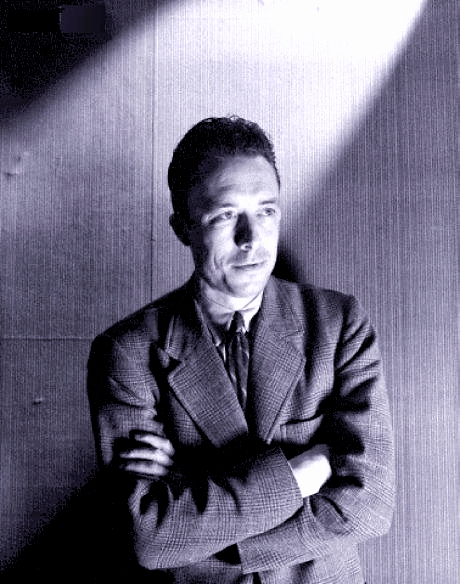
Albert camus 

Albert Camus was French philosopher, author and journalist. Camus was born on 7 November 1913 and died on 4 January 1960. He ignored systematic philosophy, had little faith in rationalism rather than argued the main Idea he accepted the Aristotelian  idea that philosophy begins in wonder.

The plague 


The book "The plague" which hauntingly captures the varying responses and struggles of people in today’s societies. La Peste portrays characters as they struggle against the plague (the Bubonic plague) sweeping a city in Algeria called Oran. Although a fictionalized piece of literature set in the 1940s.

The Plague is believed to be a depiction of true events in the coastal city of Oran, Algeria which has been decimated by intermittent outbreaks of cholera throughout its long history.

Video - 1


when thousands of rats suddenly  begin to die on the streets of Oran. As the populace begin to notice the unexplained deaths, hysteria develops, and the rats fear the spread of bubonic plague.

As more and more people fall ill and die, the town is sealed off, gates are shut, rail travel prohibited, and all mail service suspended. In today’s lingo, Oran was put on enhanced community quarantine.

The whole oran is covered with the struggles, their pains, despair and finally redemption. Camus’ characters mirror our own attitudes and responses towards the current coronavirus pandemic.


Dr. Rieux sees that many are falling ill and dying helplessly, and decides to devote all his expertise as a doctor to alleviate the suffering of the victims. Like the same nowadays doctors are paying their valuable time and duties for coronavirus affected patients to recover.

■Humanity and self centredness 

camus's of upheld in the novel The plague and makes a study of a major character to prove that they are existentialist in Heideggerian and sartre rain themes of death, alienation and a bad faith.


Furthermore it studies how the characters in the novel are inclined to deny the cruelty of their condition and hide themselves in their illusory world governed by habit.

Camus presents a contrast in the novel between the Spiritual and Mundane in life and focuses on the vision of a better society. which is based on human values. it studies the existential anguish and the cries, through characters such as dr.Rieux, Father Paneloux, Rambert ,Tarrou and cottard.

Camus's writing The Myth of Sisyphus is dedicated to establishing conscious recognition of the absurd. The purpose of The Myth of Sisyphus is to determine whether suicide is a logical reaction for the man who realises that life is absurd. The discovery of this absurd or a meaninglessness leads one to revolt, which replaces empty forms with authentically significant acts. In The Plague the notion of absurdity is presented as a collective experience. 

Conflict of Religion and science in The Plague 


Camus juxtaposes medicine against government and religion in his quest to find medical meaning in an absurd world.

The perfect shelters himself from responsibility, other townsfolk find solace in religion. Camus again distinguishes individuals from societal groups—this time, religion rather than government. The townsfolk, as to be expected, are slow to religious action as long as they can deny the plague’s existence in its early stages.

Town resolved to do battle against the plague with the weapons appropriate to them, and organized a Week of Prayer.

In the advancement  of science the meaning of medicine in an absurd world, Camus paints Oran as “a town without intimations; in other words, completely modern”, “Modern” at the time of Camus’ writing of this novel would refer to the technological advances moving to the forefront of medical practice, as well as the concomitant isolation of the patient within such a sterile system. 

Indeed, Camus describes the alienation of the ill in such a “completely modern” town as a metaphor for how a dehumanized society can isolate patients trusting.

Epidemic Literature 

Here l mentioned the whole historical epidemic which has a deep impact on the literature.  It always remains present in the literature and plague or other epidemic raised the writing advancement of writer

Prehistoric epidemic:circa 

3000 B.C.

Plague of Athens 

430 B.C.

Antonine plague 

A.D. 165 - 180

Plague of cyprian 

A.D. 250 - 271

Plague of justinian 

A.D. 541 - 542

The Black Death 

1345 - 1353

Cocoliztli epidemic 

1545 - 1548

American plague 

16th century 

Great plague of London 

1665 - 1666

Great plague of Marseille 

1720 - 1723

Rassian plague 

1770 - 1772

Philadelphia yellow fever epidemic 

1793

Flu pandemic 

1889 - 1890

American polio epidemic 

1916

Spanish flu 

1918 - 1920

Asian flu

1957 - 1958

AIDS pandemic and epidemic 

1981 - present day 

H1M1 Swine flu pandemic 

2009 - 2010

West African Ebola epidemic 

2014 - 2016

Zika virus epidemic 

2015

Std 7 ch-4 Ashes that made trees bloom

Std 7 Ch- 4 The ashes that made trees bloom Answers 2. Read the following passages carefully and answer the questions given below them: Pa...